Psychedelics, Policy, and the Risks of Moving Too Fast
Serious Mental Illness Meets Political Momentum
I was more than a little surprised and, I will admit, cautiously encouraged when President Trump issued an Executive Order on April 18 calling for accelerated access to treatment for patients with serious mental illness, including “devastating, complex, and treatment-resistant conditions.”
That kind of attention from the White House is rare, and welcome.
Still, the omission was striking. Schizophrenia and other psychotic disorders, arguably the most severe and disabling psychiatric illnesses, were not mentioned. That absence matters. Even so, any serious federal attention to mental illness is a step in the right direction.
What matters just as much, however, is how that urgency is translated into action.
A Fast Track to Psychedelics
The Order takes a very specific turn. It emphasizes the rapid development of psychedelic compounds, particularly for veterans with post-traumatic stress disorder and related conditions.
Psychedelics are drugs that alter perception, cognition, and consciousness, often producing vivid sensory distortions or hallucinations. These effects have long defined their cultural identity. They do not, however, rule out the possibility of medical usefulness.
The real question is not whether these drugs are interesting. It is whether they are ready, and whether we are in danger of convincing ourselves that they are.
Where the Science Actually Stands
Despite the growing enthusiasm, no psychedelic drug has been approved by the Food and Drug Administration for the treatment of any psychiatric disorder.
The most prominent recent attempt came from efforts to bring MDMA, better known as ecstasy, to the FDA for psychiatric use. That application was rejected. The message was clear. The FDA approval process requires a level of scientific rigor that enthusiasm alone cannot satisfy.
Ketamine is often cited as a counterexample, but it tells a different story. It was approved decades ago as an anesthetic. Its psychiatric applications emerged later and remain, in many ways, a separate conversation.
Several psychedelic-related programs are currently being prioritized, including:
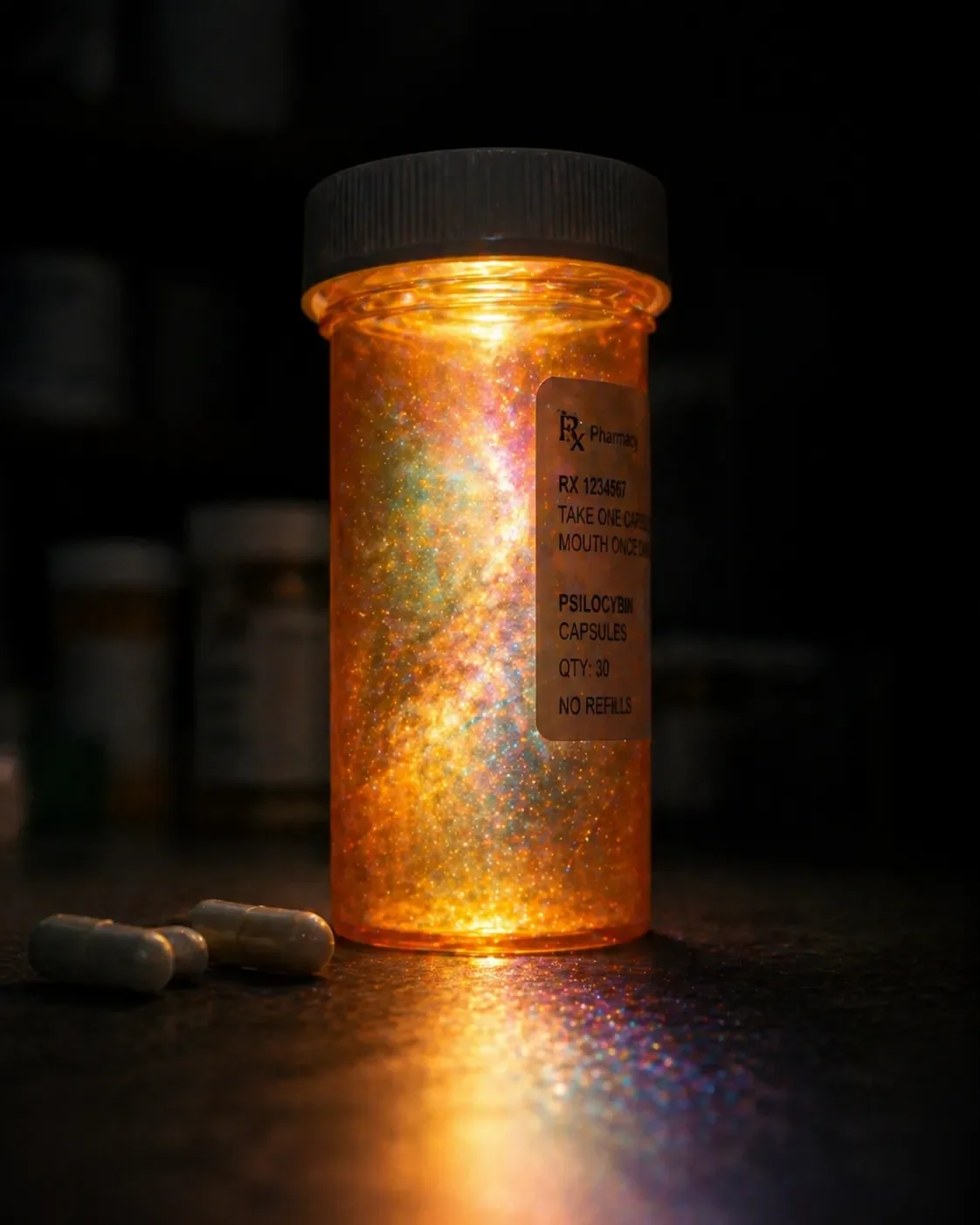
Psilocybin for treatment-resistant depression
Psilocybin for major depressive disorder
Methylone, a compound related to MDMA, for post-traumatic stress disorder
None have been approved.
Ibogaine: Promise, Complexity, and Risk
Perhaps the most surprising element of the Executive Order is the inclusion of Ibogaine, one of the least well-known psychedelic compounds.
Ibogaine is derived from a West African plant, Tabernanthe iboga, and has a long and somewhat obscure history. It was marketed in Europe beginning in 1939 under the name Lambarene as a treatment for depression, and remained available until 1970.
Interest in ibogaine resurfaced in the 1960s, when it showed potential in alleviating opioid withdrawal. Since then, it has been explored for a range of conditions, including substance use disorders and, more recently, traumatic brain injury in veterans.
Pharmacologically, ibogaine is unusually complex. It interacts with multiple brain systems, including serotonin, NMDA, opioid, and nicotinic receptors. Its metabolite, noribogaine, has more sustained effects on serotonin and opioid pathways, which may contribute to its proposed therapeutic effects.
Patients who receive ibogaine often report an intense initial experience followed by a prolonged period of introspection.
All of that makes for a compelling narrative.
But there is a less compelling reality.
Ibogaine has been associated with potentially dangerous cardiac side effects, including arrhythmias. This is not a theoretical concern. It is precisely the kind of signal that requires careful, methodical study, not acceleration.
The Gap Between Urgency and Readiness
The Administration appears eager to move quickly, particularly with ibogaine. At present, however, there is no company with an active Investigational New Drug Application for ibogaine itself, a basic requirement for initiating clinical trials in humans.
Without that step, there is no clinical pathway forward.
There is, however, a related development. The company DemeRx holds an Investigational New Drug application for noribogaine, ibogaine’s primary metabolite, for the treatment of alcohol use disorder. That may represent a more realistic and scientifically grounded starting point.
The broader issue is not whether psychedelics should be studied. They should be. The question is whether we are beginning to treat early promise, and political enthusiasm, as if they were substitutes for evidence.
Proceeding With Care, For a Reason
There is no question that we need better treatments for serious mental illness. The suffering is real, and the limitations of current therapies are well known.
But urgency is not the same as readiness.
Psychiatry has, more than once, embraced promising ideas too quickly, only to discover later that the risks were not fully understood. Psychedelics may ultimately prove to be valuable tools. Some may even change the field.
But we are not there yet.
Moving too quickly, particularly with compounds that carry real medical risk, does not accelerate progress. It increases the likelihood that we get it wrong.
For readers who want the receipts
Overview of how the FDA evaluates safety and efficacy before approving new drugs:
FDA Drug Development Process Overview
FDA Advisory Committee materials and meeting records, including discussions of MDMA-assisted therapy for PTSD:
FDA Advisory Committee Calendar
Ketamine is FDA-approved as an anesthetic, but not for psychiatric indications:
FDA Warning on Compounded Ketamine
Psilocybin clinical trials and research activity:
ClinicalTrials.gov Psilocybin Search
Ibogaine safety concerns, including cardiac risk:
NIH Ibogaine Safety Review
Investigational New Drug Application requirements for initiating human trials:
FDA IND Application Overview
Noribogaine development efforts by DemeRx:
DemeRx Website