Psychedelics in Psychiatry
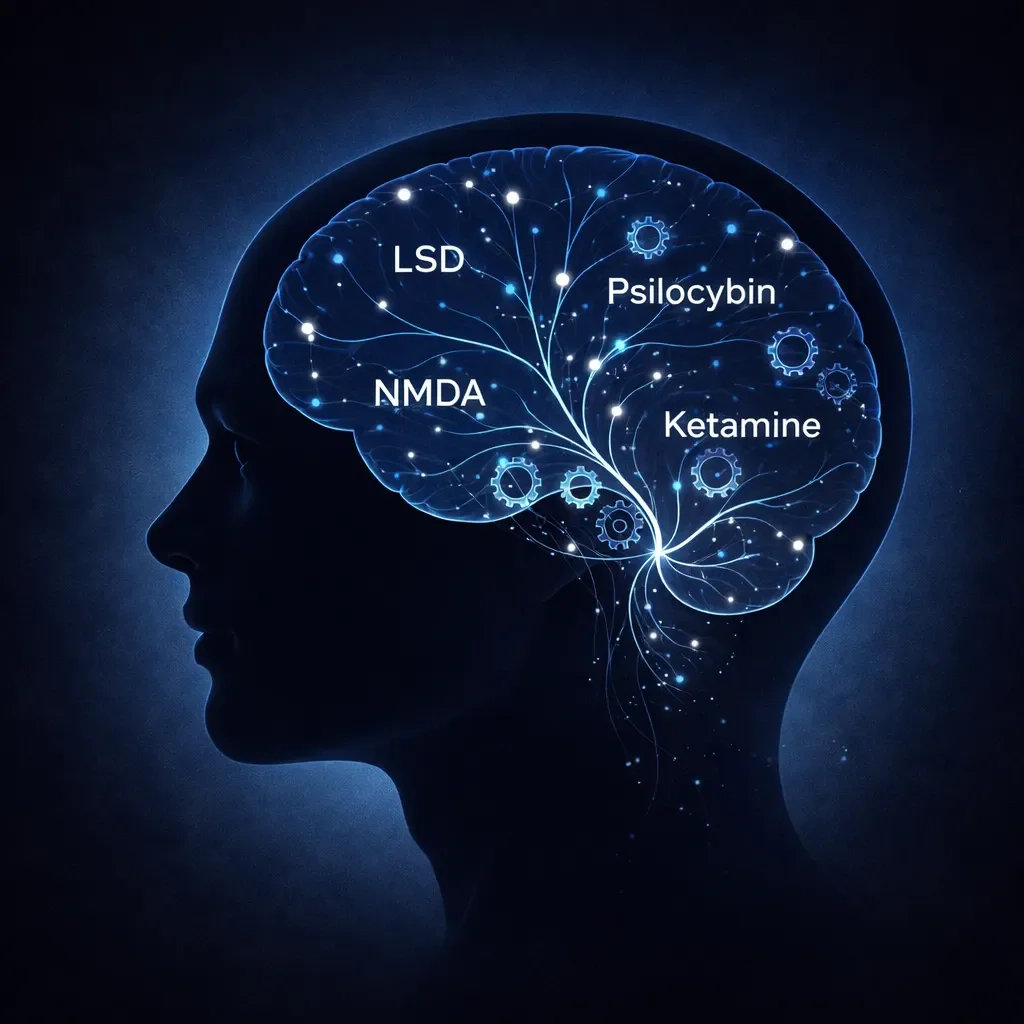
Psychedelics
The prospect of psychedelic drugs as treatments for depression and posttraumatic stress disorders has brought new vitality to what had been a languishing world of psychiatric drug development. I appreciate the enthusiasm, but I have never been drawn into the “cult-like” mission that sometimes surrounds these compounds. What follows are my thoughts, and my gradual, somewhat reluctant, openness to their therapeutic potential.
Oh, Those Days
It was during my college and medical school years that psychedelics began to move beyond Berkeley, California, and the writings of Timothy Leary and Ken Kesey. It was a time shaped by social upheaval, music, and artistic experimentation. LSD came first, followed by psilocybin as the primary agents, alongside, of course, marijuana.
These were my early years becoming a physician and psychiatrist.
I remember asking Yale’s Professor Thomas Detre, my first real link to psychiatry, whether these drugs could bring out mental illness. His reply was characteristically succinct, only if “there is a screw loose.”
Detre, a Jewish Hungarian immigrant, went on to have a profound impact on me, and more importantly on psychiatry, during his years at Yale and later as Chair at the University of Pittsburgh. He was a remarkable person.
Early Scientific Context and a Personal Lesson
It is not always appreciated that LSD was used in the 1950s and early 1960s as an experimental psychiatric treatment, particularly for alcoholism. Both LSD and psilocybin were synthesized for pharmacological and behavioral research before controlled substance laws pushed them out of the scientific mainstream, until their recent resurgence.
During my second year of medical school, an experience occurred that has stayed with me ever since.
One Saturday early in the fall semester, I was with a group of students a year ahead of me. One of the very best students in his class gathered us and, in his low-key, warm manner, told us he had discovered something unusual in a laboratory cabinet, something left behind years earlier.
“Guess what I found,” he said.
He produced several small glass vials labeled, lysergic acid diethylamide, LSD.
After some discussion, enthusiastic, though not particularly rigorous, we all decided to try it.
The essentials of the psychedelic experience were there, sensory distortions, altered patterns of thought, a kind of uneasy “fun,” and highly individualized emotional reactions.
One member of our group, arguably the brightest, and later a very distinguished professor of medicine, developed an acute anxiety reaction.
At first, we ignored it. We were distracted, by the experience, by ourselves. Eventually, in what we jokingly referred to as a “conference,” we concluded the best course of action was to get him to the emergency room.
The calmest among us took on the task and brought him to Yale–New Haven Hospital.
Fortunately, all ended well. But I never forgot what I saw, a psychedelic can destabilize even a psychologically healthy person.
Our friend recovered quickly and went on to a distinguished career. Still, I sometimes think this episode is ready-made for an installment of The Pitt.
The Biology Takes Shape
During my training, I was also exposed to the emerging biological understanding of psychedelics.
Yale Professor Malcolm Bowers was an early leader in conceptualizing schizophrenia from a biological perspective. Down the hall was the laboratory of George Aghajanian, whose work with single-cell recordings helped illuminate central nervous system processes involving serotonin.
It soon became clear that LSD, psilocybin, and DMT act as agonists at serotonin receptors, particularly the 5-HT2A receptor, producing hallucinations and altered cognition.
At the time, this was major news.
Bowers drew parallels between psychedelic-induced states and schizophrenia, proposing that an overactive serotonin system might underlie the disorder. That hypothesis did not hold, dopamine soon took center stage. Still, it wasn’t entirely off the mark.
Interestingly, second-generation antipsychotics such as risperidone and olanzapine, building on the earlier drug clozapine, block the very receptor, 5-HT2A, that psychedelics activate.
Ketamine, A Different Story
Ketamine is often grouped with psychedelics today, though its story is quite different.
Pharmacologically, ketamine is an NMDA receptor antagonist, leading to increased glutamate release. It produces a distinctive altered state characterized by dissociation and partial amnesia, but notably without respiratory depression.
Developed in the 1960s and approved by the FDA in 1970, ketamine found a unique role during the Vietnam War.
Combat medics faced a recurring challenge, how to safely move severely injured soldiers, often in extreme pain and emotional distress, onto evacuation helicopters. Ketamine changed that equation.
It not only provided analgesia but induced a dissociative state that seemed to distance the soldier psychologically from the trauma of combat. In this state, patients could be transported more safely and efficiently.
Ketamine remains widely used today as an anesthetic and appears on the World Health Organization’s List of Essential Medicines.
During my time at NIMH, we studied ketamine’s cognitive effects. In healthy individuals, it produced disturbances strikingly similar to aspects of schizophrenia, and in patients with schizophrenia, it worsened symptoms. Clozapine, interestingly, could mitigate some of these effects.
Psychedelics Today
While serotonin mechanisms ultimately proved less central to schizophrenia than once hoped, they became highly relevant to depression.
The approval of Prozac in 1987 marked the beginning of the SSRI era, followed by SNRIs. These remain the backbone of antidepressant treatment today.
Against that backdrop, the renewed interest in psychedelics can feel, at times, like a return to earlier biological hopes, this time focused on emotional cognition and rapid antidepressant effects.
Having served on an FDA Advisory Committee, I have seen how the agency evaluates psychiatric drugs. The recent application by Lykos Therapeutics for approval of MDMA as a treatment for PTSD illustrates the challenges ahead.
Clinical trials required therapist involvement during drug administration, introducing significant variability. Concerns about trial design and ethical conduct ultimately undermined the strength of the data, and the application was denied.
This sets a high bar. Future psychedelic therapies will need to meet rigorous standards, scientifically and ethically. That will not be easy.
Ketamine in Practice
Because ketamine is already an approved drug, physicians may use it off-label. This has led to the rapid growth of ketamine treatment centers.
My own clinical impression has been more cautious than enthusiastic. While some patients benefit, I have seen less consistent antidepressant effects than others report, along with concerning behavioral side effects.
Esketamine, a nasal spray formulation developed by Janssen Pharmaceuticals, has shown efficacy in treatment-resistant depression and in patients with acute suicidality. It has received FDA approval for these indications under the name Spravato.
And Now?
The psychedelic field is still absorbing the setback of MDMA’s failed approval. Ketamine and esketamine will likely sustain momentum in the near term, particularly for treatment-resistant depression.
Meanwhile, new companies are developing next-generation compounds, often based on traditional psychedelic mechanisms. The challenge will be clear, demonstrate meaningful therapeutic benefit while maintaining rigorous trial design.
If that balance can be achieved, psychedelics may yet find a secure place in psychiatric treatment.
Until then, we will all be watching closely.